

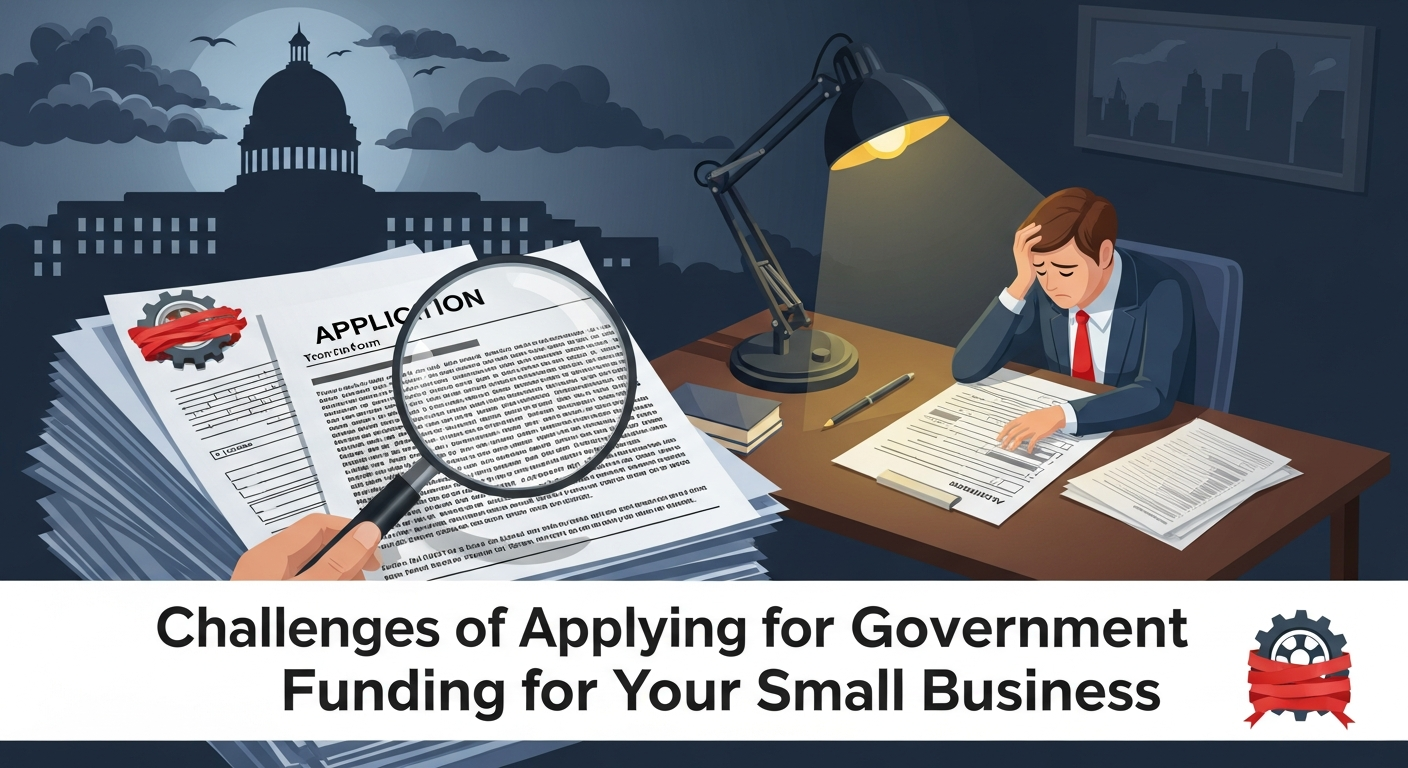

Challenges of Applying for Government Funding for Your Small Business
Are you a small business owner in Canada looking to grow and expand, but struggling to secure the funding you need? Applying for government funding can be an attractive option, but it is not always easy. From navigating the complex application process to meeting strict eligibility criteria, there are numerous challenges that small business owners face when seeking government funding.
In this blog, we will explore the various obstacles you may encounter when applying for funding and offer insights and strategies to help you overcome them. Whether you are just starting out or looking to take your business to the next level, understanding these challenges is crucial to securing the financial support you need to achieve your goals.
Topics Covered
- Eligibility Requirements: Understanding What Makes You Eligible for Funding
- The Application Process: Steps to Follow and Common Mistakes to Avoid
- Competitive Nature of Funding: How to Stand Out Among Other Applicants
- Limited Funding: Coping with Limited Availability of Grants and Financial Support
- Maintaining Compliance: Making Sure You Meet Funding Requirements and Regulations
- Uncertainty of Success: Managing Expectations and Preparing for Potential Disappointment
1. Eligibility Requirements: Understanding What Makes You Eligible for Funding
Funding is crucial for many organizations, businesses, and individuals to grow and sustain themselves. However, getting funds can be challenging, and receiving them often depends on eligibility requirements. Before applying for funding, it is important to understand what makes you eligible to increase your chances of receiving it.
GROW YOUR BUSINESS WITH GRANTS & LOANS

Learn about the funding available for your small business. It just takes a second!

Eligibility requirements vary depending on the funding source and type of funding. Some of the most common eligibility requirements include:
- Geography: Funding providers may restrict funding to specific geographic locations, such as countries, regions, or communities. Ensure you are eligible based on where you operate or reside.
- Type of organization: Certain funding is available only to specific types of organizations, such as nonprofits, startups, or social enterprises. Make sure you qualify.
- Project or program focus: Funding may be restricted to specific programs or initiatives, such as education, health, or sustainable development. Ensure your project aligns with the funding provider’s priorities.
- Stage of the project: Some funding is only available for specific project stages, such as ideation, development, or scaling. Match your project stage with the type of funding offered.
- Financial capacity: Funding providers may restrict funding to organizations or individuals with a specific financial capacity or need. Ensure you meet the financial requirements listed.
Understanding eligibility requirements is the first step toward applying for funding. If you do not meet the eligibility criteria, you are unlikely to receive any funding from that source. Be sure to read and understand the eligibility requirements before applying.
2. The Application Process: Steps to Follow and Common Mistakes to Avoid
Once you have identified a funding opportunity that matches your eligibility criteria, the next step is to apply. Applying for funding can be a time-consuming and rigorous process, but it is a critical step that can ultimately determine if you receive funds or not.
Steps to Follow
- Initial research: Learn more about the funding provider, the funding opportunity, and the eligibility criteria. Confirm that you qualify for the funding before proceeding.
- Prepare the application: Carefully read the instructions and fill out the application form. Provide accurate and detailed information that meets the requirements.
- Budget planning: Create a budget plan that outlines your expected expenses and revenue. Ensure your budget is realistic and aligned with the funding provider’s priorities.
- Supporting documents: Prepare all the documents required by the funding provider, such as project proposals, business plans, and feasibility studies.
- Final submission: Submit your application before the deadline. Review your application and supporting documents to ensure they are complete and meet the funding provider’s requirements.
Common Mistakes to Avoid
- Not reading the application instructions carefully, which may lead to incomplete or inaccurate applications.
- Submitting applications that do not align with the funding provider’s priorities and requirements.
- Underestimating or overestimating budget projections.
- Submitting applications past the deadline.
3. Competitive Nature of Funding: How to Stand Out Among Other Applicants
The competition for funding can be fierce, with many qualified applicants vying for limited funding opportunities. To increase your chances of receiving funding, there are several strategies you can implement to differentiate yourself from other applicants.
- Clear and concise proposal: Clearly outline your project’s unique features, goals, and objectives in simple and understandable language.
- High-quality budget: Present a realistic, well-documented, and professional budget.
- Use data and research: Support your proposal with research, data, statistics, and relevant case studies.
- Engage with the funding provider: Attend events, conferences, and network to demonstrate commitment and interest.
- Seek additional resources: Partner with other organizations to show collaboration and added support.
By implementing these strategies, you can stand out in a competitive funding environment and increase your chances of receiving funding.
4. Limited Funding: Coping with Limited Availability of Grants and Financial Support
One of the biggest challenges for applicants seeking funding is the limited availability of funding opportunities. Many organizations and individuals may be competing for the same pool of funds.
- Diversify your funding sources: Seek funding from multiple sources, including private foundations or alternative financing options.
- Focus on high-impact projects: Demonstrate social, economic, or environmental benefits.
- Improve project sustainability: Show how the project can continue beyond the funding period.
- Increase efficiency: Highlight cost-effectiveness, scalability, and replicability.
- Be persistent but realistic: Focus on opportunities that are the best fit for your project.
5. Maintaining Compliance: Making Sure You Meet Funding Requirements and Regulations
Once you have received funding, maintaining compliance with the funding provider’s requirements and regulations is essential.
- Understand the requirements: Be aware of milestones, targets, and reporting obligations.
- Use the funding effectively: Ensure funds are used as intended.
- Track and report progress: Maintain detailed financial and progress records.
- Communicate regularly: Keep the funding provider informed of progress and challenges.
- Seek help when needed: Ask for guidance or external expertise when necessary.
Failing to maintain compliance can result in loss of funding, legal issues, and reputational damage.
6. Uncertainty of Success: Managing Expectations and Preparing for Potential Disappointment
Even with strong proposals and full compliance, receiving funding is not guaranteed. Managing expectations is essential.
- Plan for different scenarios: Prepare for partial or unsuccessful funding outcomes.
- Stay positive: Use rejection as a learning opportunity.
- Seek feedback: Request insights to improve future applications.
- Learn from others: Network and study similar experiences.
- Be realistic: Focus on funding opportunities that align with your goals.
Managing uncertainty may be challenging, but preparation and resilience can help you navigate the funding process successfully.
Conclusion
Applying for funding can be a challenging process, but understanding eligibility requirements, following the application process, differentiating yourself from other applicants, coping with limited funding, maintaining compliance, and managing expectations can increase your chances of success.
Focus on proposals that align with your goals, demonstrate sustainability, and prioritize high-impact projects. Seek feedback, leverage networks, and remain adaptable. Staying optimistic and open to learning from both successes and failures will help you navigate the funding process with confidence and resilience.