

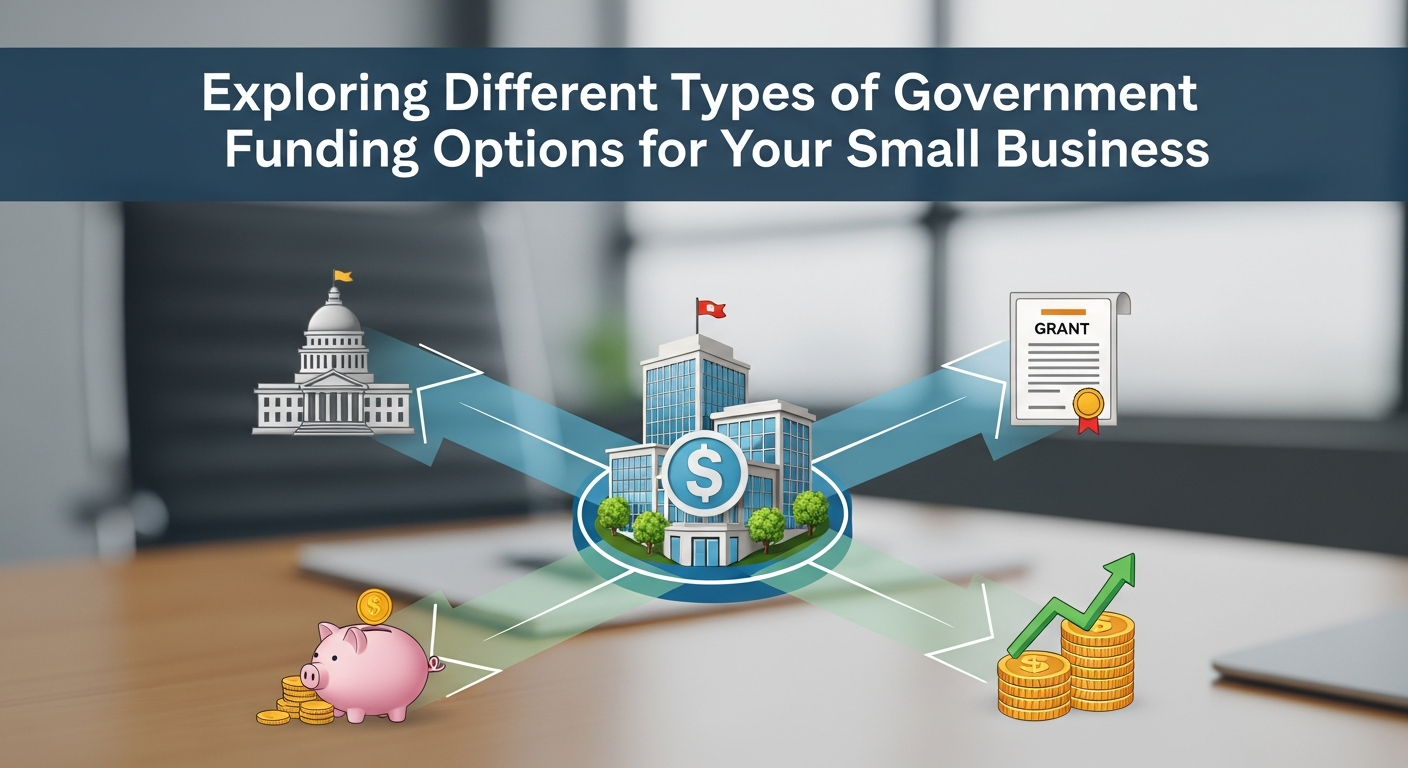

Exploring Different Types of Government Funding Options for Your Small Business
As a small business owner in Canada, one of the biggest challenges you may face is securing the necessary funding to achieve your goals. Luckily, the Canadian government offers a variety of funding options to support small businesses in their growth and development.
When it comes to funding your small business, it’s essential to understand the different types of government funding options available, their requirements, and how to apply. In this blog, we’ll explore some of the most popular government funding options available to Canadian small business owners, from grants to loans and tax credits.
Whether you’re just starting or looking to scale up, this guide will help you navigate the world of government funding and find the best option for your specific needs. So, let’s dive in and explore the possibilities.
GROW YOUR BUSINESS WITH GRANTS & LOANS

Learn about the funding available for your small business. It just takes a second!

Topics Covered
- An Overview of Government Funding Options for Small Businesses in Canada
- Grants for Small Business: Understanding their Requirements and Application Process
- Loans for Small Businesses: Types, Eligibility, and Repayment Terms
- Tax Credits for Small Businesses: What They Are and How to Take Advantage of Them
- Navigating the World of Angel Investors and Venture Capitalists: A Guide for Small Businesses
- Alternative Government Funding Options for Small Businesses: Crowdfunding, Microloans, and More
1. An Overview of Government Funding Options for Small Businesses in Canada
Small businesses are the backbone of the Canadian economy, and the government provides various funding options to help them grow and succeed. Some of the most popular funding options include grants, loans, and tax credits.
The Canadian government has different programs that offer funding depending on the type of business and the industry. Businesses can leverage the funding opportunities to increase their chances of success in a competitive marketplace.
2. Grants for Small Business: Understanding their Requirements and Application Process
Grants are a great funding option for small businesses as they do not require any repayments. However, the application process for grants can often be competitive and requires a comprehensive understanding of the requirements.
Small businesses should identify the grants that match their industry and prepare a compelling application that highlights their passion, experience, and business goals. Applicants should also take note of the eligibility criteria and follow the application guidelines carefully.
3. Loans for Small Businesses: Types, Eligibility, and Repayment Terms
Small business loans are a popular option for business owners who need capital to launch, expand, or pivot their businesses. There are various types of loans available, including government-backed loans, term loans, and microloans.
Entrepreneurs should consider the eligibility requirements, repayment terms, and interest rates before taking on a loan. A well-structured loan can provide the necessary funds to grow the business, improve cash flow, or consolidate debt.
4. Tax Credits for Small Businesses: What They Are and How to Take Advantage of Them
Tax credits are a form of government funding that provides a break on business taxes. Small businesses can use tax credits to offset taxes owed, receive refunds, or reduce their tax liability.
Businesses should understand the different types of tax credits available, including research and development tax credits, apprenticeship tax credits, and innovation tax credits. To take advantage of tax credits, businesses need to follow the guidelines and provide the necessary documentation to support their claims.
5. Navigating the World of Angel Investors and Venture Capitalists: A Guide for Small Businesses
Angel investors and venture capitalists are private investors who provide funding to small businesses in exchange for ownership equity. These investors can bring industry expertise, connections, and mentorship to help small businesses grow.
However, seeking out investors and pitching ideas can be intimidating and requires preparation. Small businesses need to develop a compelling business plan, financial projections, and a clear vision to attract investors.
6. Alternative Government Funding Options for Small Businesses: Crowdfunding, Microloans, and More
In addition to traditional government funding and private investors, there are alternative funding options available to small businesses. Crowdfunding is a popular way to raise funds from a large number of people, while microloans offer smaller amounts of funds with favorable repayment terms.
Other government funding options include export development programs, cooperative programs, and wage subsidies. Small businesses should explore all available funding options and choose the best one that suits their business goals.
Conclusion
In conclusion, the Canadian government offers various funding options for small businesses, including grants, loans, tax credits, and alternative funding options.
Small business owners need to identify the programs that match their industry and business goals, while also understanding the eligibility requirements, application processes, and repayment terms.
Private investors, such as angel investors and venture capitalists, can also provide funding and support to small businesses. By exploring these funding options and developing a clear business plan, small businesses can increase their chances of success in a competitive marketplace.