

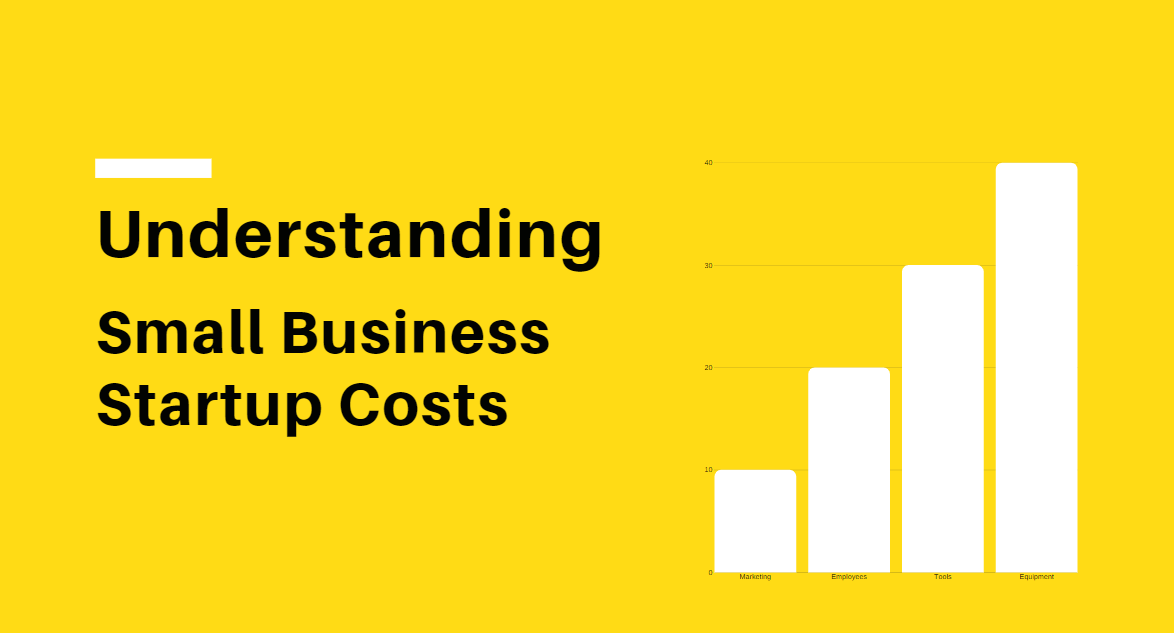

There is A LOT more to starting a small business than just throwing money at it and “making it work”, or “trying it out”. Understanding small business startup costs is one of the first steps to starting a proper business from the beginning, as it’s usually the one factor that makes or breaks a company early on.
In the early stages of starting a small business, one must carefully plan out the financials and the startup costs of the business.
Many startups neglect this critical process and end up relying on the customers to keep the organization afloat—usually with disastrous results and major stress to the owner.
GROW YOUR BUSINESS WITH GRANTS & LOANS

Learn about the funding available for your small business. It just takes a second!

Today we are going to be looking at how you can understand Small Business Startup Costs and actually apply the principles to your own business.
Understanding Small Business Startup Costs
An essential step to starting a small business and understanding small business startup costs is creating your business plan.
Your business plan is a detailed outline of how the business should operate and be created. Developing your business plan forces you to understand your small business startup costs in detail, including the costs associated with your business and costs which add or take away from the bottom line.
Small business startup costs are expenses you incur during the process of creating the new business.
While all businesses are different, they all require some level of startup cost.
For example: a brick-and-mortar business such as a car mechanic may have different expenses than an online jewellery-making business. However, there are always a few small business startup costs which are common to all types of small businesses. These include:
- Marketing and advertising costs
- Costs of borrowing money (loans, payments, minimums, interest, etc.)
- Payroll for yourself and employees
- Purchase of tools, supplies and inventory
- Insurance, licenses, permits
- Cost of starting up (research & development)
- Tech expenses (phone, internet, software, etc.)
Let’s break down each of these expenses to give you a better understanding of what your small business startup costs may be.
Marketing and Advertising Costs
When starting a small business in Canada, one of the startup costs you will most likely come across will be costs to promote your business.
Marketing and advertising costs can include business cards, banners, radio ads, internet advertising campaigns, and any expenses associated with promoting your business to attract your target audience.
Costs of Borrowing Money
If you’re a small business owner with limited capital, chances are that you’ve borrowed money to start up. This money could come from personal credit cards, lines of credit, family/friends, private investors, or government funding agencies.
Whatever the case may be, you’re most likely responsible for payments, minimums, or interest fees—except for non-repayable government funding programs.
Either way, the cost of borrowing money is a small business startup cost that cannot be avoided.
Payroll and Your Employees
Planning on hiring employees? Will you need to train them? Are you paying yourself?
Payroll is a startup cost you cannot avoid if you plan on hiring. One way to reduce initial payroll costs is by not paying yourself temporarily (common for part-time entrepreneurs still working full-time jobs) or avoiding early hiring.
Purchase of Tools, Supplies and Inventory
Depending on your type of business, tools, supplies, and inventory may be one of your major startup costs.
While these expenses might be essential for your business, there are ways to reduce these costs—such as buying used equipment, leasing instead of buying, or applying for government programs that help cover costs of tools and equipment.
Check the Funding Database for grants, loans, and tax breaks available for equipment purchases.
Insurance, Licenses and Permits
Registering your small business, obtaining permits, and paying for licenses are additional startup costs to account for.
Sole proprietorships and partnerships cost less to register, while incorporation can involve higher fees. Certain industries also require specialized permits or licenses—resulting in more startup costs.
It’s essential to pre-plan and understand what is required so that you can budget and prepare for these expenses.
Small Business Startup Costs
Oddly enough, one of your startup expenses will be…the startup expenses themselves.
These include the costs related to research, development, and planning before the official launch of your business.
Tech Costs
Tech expenses can include internet, phone bills, website creation, information systems, and software such as payroll tools, accounting software, and marketing platforms.
Depending on your business, these costs may be minimal—or they may be significant.
Understanding your small business startup costs early on, even before creating your business plan, will give you and your business a major head start.